
Multi cyclone Manufacturer in Satara
Multi cyclone Manufacturer in Satara, we are one of the leading manufacturers of modular multicyclones in India, with a broad selection of categories that perform with great efficiency and economy. We provide the following categories: Cyclone with Bottle Hopper, Modular Single Cyclone, Modular Multi-Cyclone, and Cyclone with MS Powder collection Bin. Our bowers have horsepower ratings between 1 and 15.
Mahakali Make Cyclone units have the following benefits:-
Extremely effective
Reasonably priced
Models we use has an easy-to-use, maintenance-free design.
Simple to maintain and clean.
High rate of powder collection.
Electricity is saved.
Low noise, very steady, and vibration-free.
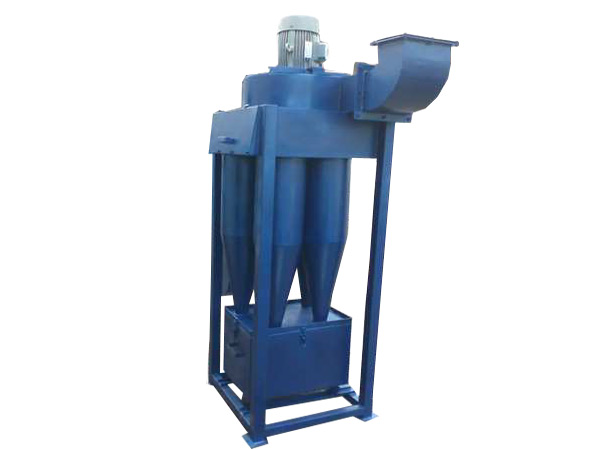
When particulate matter-containing gas enters a cyclone tangentially, the gas spins downward, throwing the particles to the side of the cyclone and releasing them at the bottom or apex of the cyclone when the gas reverses its direction. Since the bottom of the cyclone is sealed, the gas is compelled to change course and spiral back up its centre. A vertical reverse-flow cyclone is the type of cyclone that is most frequently encountered.
Environmentally speaking, haze is caused by entrained particles in the atmosphere. Over several months, the atmosphere catches tiny particles. It is essential to filter these particles out of the gas stream before to release in order to prevent their release into the environment.
Particles smaller than 10 meters, and especially those smaller than 2.5 meters, are the most hazardous to human health. (known as PM10 and PM2.5, respectively). When it comes to PM2.5, it might reach the circulation right away after passing via the respiratory system. On the other hand, due to its small size, PM10 can get buried deep within the respiratory system.
Particulates from combustion are referred to as “smoke” particles. As the amount of particles rises, the smoke gets denser. In particles that are white or light grey in colour and emit white or grey smoke, ash is frequently present, whereas in particles that are black and emit black smoke, unburned carbon is present.
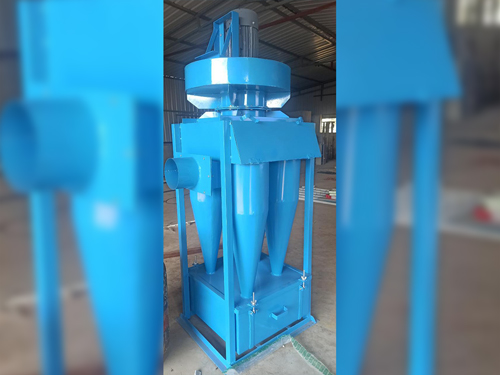
Particulate matter poses a threat to human health, hence multi-cyclones are necessary to remove it from a gas stream before it is vented to the environment via a chimney stack.
To separate particulate materials, which are solid particles, from the gases in which they are enclosed, multi-cyclones are used. Multi-cyclones can be used, for example, to separate flyash from flue gas after a combustion operation or to separate sand from hot air after a rotary or fluidized bed drier.
A multi-cyclone is made up of numerous distinct cyclones, each of which separates particles from a gas stream using the concepts of centrifugal force and inertia. Instead of the tangential entry illustrated in the above picture, the particulate-laden gas frequently enters each individual cyclone inside a multi-cyclone using inlet guide vanes. The gas is forced to spiral downward to the centre of each cyclone by the guide vanes.